
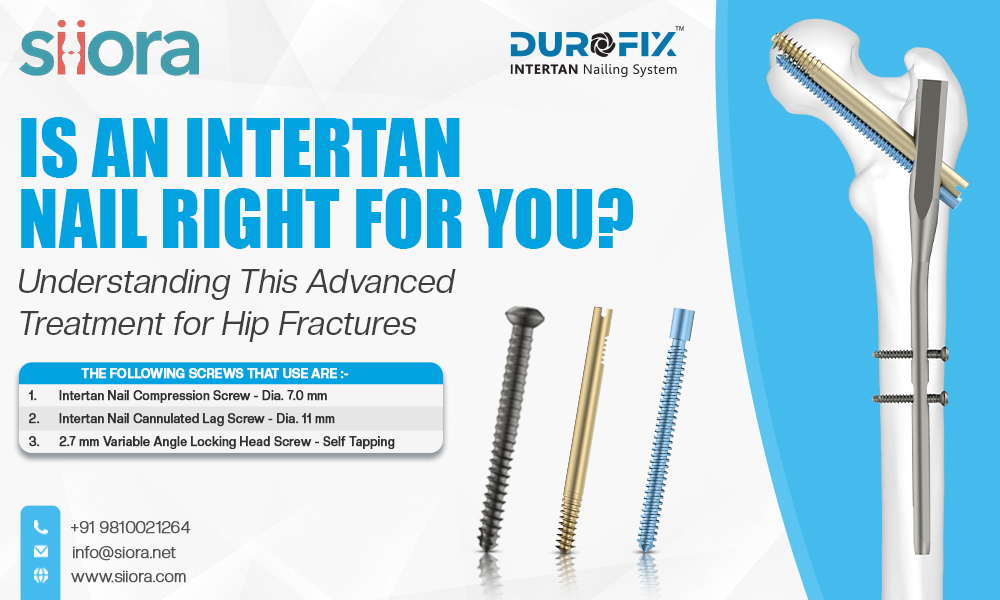
A hip fracture can change daily life overnight. Simple movements become painful, walking feels uncertain, and even routine tasks may need support. For many patients, surgery becomes the best way to restore mobility and reduce long-term complications. One option that doctors may recommend in certain cases is an Intertan nail.
Understanding Hip Fractures First
Hip fractures usually occur in the upper part of the thigh bone, close to the hip joint. They are common in older adults, often after a fall, but they can also happen in younger people due to accidents or high-impact injuries. Because this area carries body weight, healing without surgery is difficult in most cases.
Doctors choose surgical treatment based on the fracture pattern, bone quality, age, and activity level of the patient. Not all hip fractures are the same, and this is where implant selection becomes important.
What Is an Intertan Nail?
An Intertan nail is a type of intramedullary implant used to treat specific hip fractures, mainly those occurring between the neck and shaft of the femur. It is placed inside the bone, rather than on the surface, and helps hold fractured pieces together while the bone heals.
What makes this nail different is its design. It uses two integrated screws near the hip joint instead of one. This helps control rotation and provides better stability at the fracture site.
How Does It Help in Healing?
The main goal of any fracture treatment is to allow the bone to heal in the correct position. The Intertan nail supports this by keeping the fracture stable while still allowing controlled compression. This balance is important. Too much movement can delay healing, while too much rigidity can slow natural bone repair.
Because the nail sits inside the bone, it shares the body’s load more naturally. This can reduce stress on the implant and help the bone regain strength over time.
Who May Benefit from This Treatment?
This type of nail is often recommended for patients with unstable hip fractures, where simple fixation may not be enough. It is commonly used in elderly patients, especially those with weaker bones, because it provides strong internal support.
That said, it is not a one-size-fits-all solution. Some fractures may be better treated with plates or joint replacement, depending on the situation. Your doctor will look at X-rays, scan results, and overall health before suggesting this option.
Recovery and Daily Life After Surgery
Recovery after hip fracture surgery takes time and patience. With stable fixation, many patients are encouraged to start gentle movement early. Walking with support may begin sooner than expected, which helps prevent stiffness and other complications.
Physiotherapy plays a big role in recovery. The implant provides internal stability, but muscles and joints still need to regain strength and confidence.
Possible Risks and Considerations
Like any surgery, this treatment comes with risks. Infection, pain, or delayed healing can occur, although these are not common when surgery and aftercare are done properly. Implant-related issues are also possible, but good surgical technique greatly reduces these chances.
Is It the Right Choice for You?
Whether an Intertan nail is right for you depends on many factors: the type of fracture, your bone health, age, activity level, and personal recovery goals. The best approach is an open discussion with your orthopedic surgeon, who can explain why a certain trauma implant is recommended in your case.
Final Thoughts
Hip fractures are serious, but modern surgical options offer reliable ways to regain movement and independence. The Intertan nail is one such option that provides stability, supports healing, and helps many patients return to daily life safely. Understanding your treatment helps you feel more confident and involved in your recovery journey.
 Siora Surgicals Pvt. Ltd.