
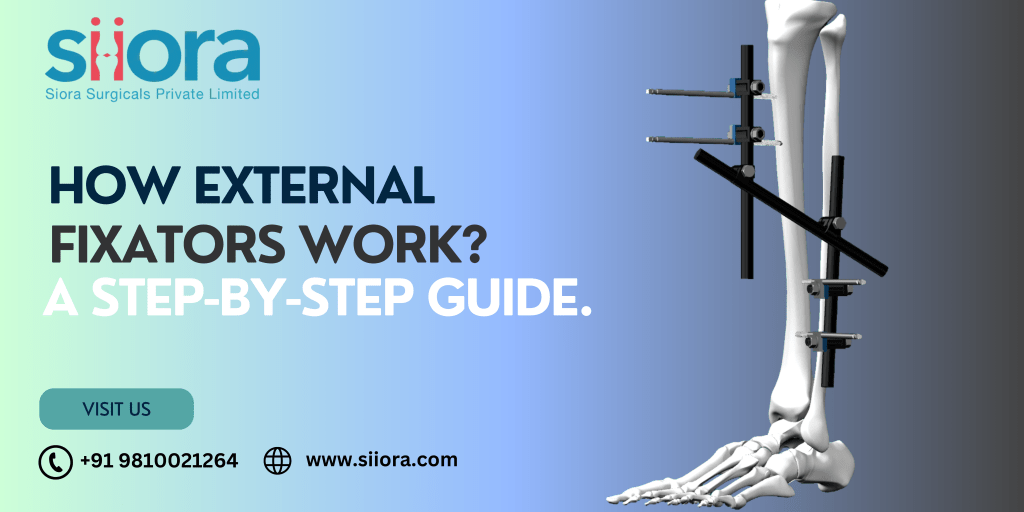
External fixators are an essential tool in modern orthopedics, playing a crucial role in treating complex fractures, correcting deformities, and stabilizing bones during the healing process. These devices are an external frame that supports injured bones or joints from outside the body. Understanding how they work can provide patients and caregivers with clarity and confidence during treatment. This step-by-step guide explains the mechanics and purpose of External fixator systems.
Step 1: Understanding the Need for an External Fixator
External fixators are typically used when internal fixation methods, such as plates or screws, are unsuitable. This could be due to:
- Severe Trauma: Complex or open fractures where internal fixation poses a higher risk of infection.
- Bone Deformities: Conditions requiring gradual correction, such as limb length discrepancies or angular deformities.
- Stability Issues: Situations where immediate stabilization is necessary, like in emergency care.
Doctors recommend external fixators based on the location, type, and severity of the injury or deformity.
Step 2: The Components of an External Fixator
External fixators consist of three main parts:
- Pins or Wires: Inserted into the bone through the skin. These serve as anchor points.
- Rods or Rings: Form the external framework that connects the pins.
- Clamps or Joints: Secure the pins to the frame and allow adjustments.
These components are designed to provide rigid support while accommodating the body’s natural healing processes.
Step 3: The Procedure for Placement
The process of applying an external fixator involves the following steps:
- Preoperative Planning: Surgeons assess X-rays or CT scans to determine the optimal placement of the fixator.
- Anesthesia: The procedure is performed under local, regional, or general anesthesia to ensure the patient’s comfort.
- Insertion of Pins or Wires: The surgeon drills small holes into the bone and inserts the pins or wires. These are carefully positioned to avoid damage to nerves, blood vessels, or muscles.
- Attachment of the Frame: The external rods or rings are attached to the pins, forming a stable structure. Adjustments may be made to align the bone fragments or correct deformities.
The entire procedure is done with precision to ensure stability and minimize complications.
Step 4: Function During Healing
Once in place, the external fixator performs several functions:
- Bone Alignment: It holds bone fragments in the correct position, promoting proper healing.
- Weight-Bearing Support: Depending on the injury, the fixator can allow partial or full weight-bearing, enabling mobility while protecting the injured area.
- Adjustments: For deformity correction, the frame can be adjusted gradually, often using a process called distraction osteogenesis. This involves small, controlled movements of the bone to encourage new tissue growth.
Step 5: Maintenance and Care
Proper care of an external fixator is crucial to prevent complications such as infection. Patients are guided to:
- Clean Pin Sites: Regularly clean the skin around the pins using antiseptic solutions.
- Monitor for Infection: Watch for redness, swelling, or discharge around pin sites.
- Follow Medical Advice: Attend regular follow-up appointments for adjustments and monitoring.
Patients may also receive physical therapy to maintain joint mobility and muscle strength during treatment.
Step 6: Removal of the External Fixator
Once the bone has healed adequately, the external fixator is removed. This procedure is typically less invasive than its placement:
- The surgeon loosens the clamps and carefully removes the pins and frame.
- Local anesthesia may be used for comfort.
- The pin sites heal naturally, leaving minimal scarring.
Benefits of External Fixators
- Versatility: Ideal for various injuries and conditions.
- Minimized Invasiveness: Reduces the need for extensive surgery.
- Adjustability: Allows for real-time corrections during treatment.
- Promotes Healing: Facilitates natural bone growth and recovery.
Conclusion
External fixators are a remarkable advancement in orthopedic treatment, offering patients a safe and effective solution for complex bone injuries and deformities. By understanding their purpose and how they work, patients can actively participate in their care and recovery process. If you or a loved one requires an external fixator, consult with your healthcare provider to discuss the best approach tailored to your needs.Explore a newer and advanced range of trauma implants and other healthcare products at Arab Health 2025.
 Siora Surgicals Pvt. Ltd.